Frisch & Company offers a variety of international literary works translated creatively into contemporary English language. Readers get a good introduction to the works of writers from European and Asian cultures that have limited circulation in the United States. The short stories and novellas published in eBook format are interesting and carefully selected to be informative and entertaining to U. S. readers. It is important in the 21st Century to understand the world view of artists from countries around the world.
A Tabby-cat’s Tale by Han Dong (translated from Chinese with care by Nicky Harman) gives us a glimpse of the current structure of Chinese culture. The novel takes place in a Nanjing multi-story apartment building. A family consisting of a mother, her two sons, and daughter-in-law live in a limited space but are harmonious in their interactions. The family has enough income to live comfortably given the circumstances of life at the edge of a modern Chinese city.
When a beautiful little kitten is brought into the home by the sister-in-law, all remains peaceful and the cat adds color to the family experience in the apartment. Cousin Coco, a child who lives downstairs, importunes Tabby’s family to let him take the cat to his family’s apartment for a few hours. Granted permission, the cat is taken and returned. Tabby is a different cat when he returns, reclusive, unloving, careless in urinating and defecating, and failing to groom himself. The family is mortified by the filth and odor created by the now ugly cat, but they are powerless to control him. The reader begins to see that this is truly “Tabby’s Tale” and that the cat uses his main character, the second son, to communicate his feline existential condition. The human narrator is a naïve but reliable observer of the cat’s behavior that reveals the complex inner state of the once beautiful cat.
The tale becomes tragic due to continued mal-appropriate behavior of the tabby cat when stressful events occur in its life related to legal mandates. For example, the cat is prohibited from living on the roof. Tabby is heroic in his effort to endure hardships complicated by his own self -defeating actions. The actions are the result of his “disappearance” and failure to adjust to the regimented and restricted lives of his human characters. The reader gets caught up in the narrative created by Tabby and hopes for redemption in the form of cat’s ability to love himself and his human family. Is Tabby successful in recovering from his victimization during Coco’s “cultural revolution” and learning to adjust to maintain personal freedom in a restricted social environment? It is indeed an interesting tale.
Mo Yan won the Nobel Prize for Literature in 2012. The Chinese writer discusses his writing in the Preface of a collection of 8 short stories in Shifu, You’ll Do Anything for a Laugh translated from the Chinese by Howard Goldblatt. The writer grew up poor in a rural area of China and was pulled out of school to help his family with their farming work. Mo Yan was lonely and developed a habit of telling stories about his observations of his sparsely populated environment. His incessant story telling caused his mother to ask him, if he ever stopped talking. This question produced a nick name, Mo Yan that means don’t speak. During his farm work, he met a writer toiling in the fields as punishment for being a right wing agitator. Mo Yan liked the descriptions of the writer related to writing stories and being able to afford three meals a day.
In this collection of short stories, the title story "Shifu, You’ll Do Anything for a Laugh" is a tale of downsizing of old factory jobs to make way for new workers in a business booming China. It also describes social hardships resulting from dramatic economic change.
"Man and Beast" is a story of redemption and forgiveness on an isolated mountain on the island of Hokkaido.
"Soaring" is a fable of perceived beauty and ugliness and societal forces that lead to tragedy and deliverance.
"Iron Child" is a fable of persecution and resilience but final acceptance of inescapable human descruction.
"The Cure" illustrates the ultimate solution to societal problems that seems to haunt all totalitarian political systems. The ultimate degradation of the human spirit turns the solution into an identification with the aggressor.
"Love Story" is a tale of young love in the failed utopia of the Cultural Revolution in the middle decades of the 20th Century in China. In spite of the political insanity, human beings continue to procreate and evolve beyond temporary “absolute truths.”
"Shen Garden" explores the meaningless life of a “successful” man who turns his back on the one love relationship that could have resulted in ego integrity rather than despair.
Finally, "Abandoned Child" is the story of a common occurrence in a country where the government mandates social engineering justified by the idea that family planning will curb natural evolution and produce a Utopian society.
Mo Yan’s handpicked set of 8 stories was first published in 2001 then re-released in 2011. He set the context in his Preface by writing that, “Looking back some forty years, to the early 1960s, I revisit one of modern China’s most bizarre periods, an era of unprecedented fanaticism.” China was burdened by “economic stagnation and individual deprivation.”
Mo Yan’s stories reflect his development as a writer starting in the 1980s “when China opened its door to the outside world, that we finally began to face reality, as if waking from a dream.” In this volume of short stories, the reader can see in part why Mo Yan won the Nobel Prize for Literature in 2012.
Thomas Pynchon's epic novel, Against the Day, is an odyssey in four dimensions, and more. The reader is introduced to this imaginary space during the first pages of chapter one. The boys' group, 'Chums of Chance,' discuss the altitude of their dirigible with the conclusion that if they keep going up into the lighted sky, they'll be going down. How can rising become falling? All of the key characters in the tale ask themselves similar questions.
The reader realizes early on that the reading time of Against the Day will be different from other novels, longer and shorter. In the novel, the path of light is followed as it travels through the pages at a constant velocity. Yet it is always changing over time, illuminating evolving territories and imaginary borders, and shining on the people who are both grounded and accepting of fantasy. The reader's view of history and individual destiny is guided by Pynchon's description of a time-territory-personality matrix.
Major themes emerge from this imaginary time-space. One of them describes the human genius and folly as seen in the historical record. Pynchon shows the reader that ideas begin as fantasy. Mathematicians translate these fantasies into arbitrary symbols using an arcane logical system. Scientists use the symbols in their experiments attempting to ground them in quotidian reality. Leaders of commerce take the realized ideas and create marketable products. Politicians corner the markets and carve up the land for power and defense.
The novel describes paths for the secondary characters parallel to the historical record, but different. Unlike history, the lives of many of the background characters do not flow continuously. Some stay as children in the world of fantasy. Some get bound up in symbols and never find the ground. Some characters are caught up in science without anticipating the applications that will be made of their discoveries. Other characters spend their lives in commerce fighting for wages or using tactics to maintain the dominance of wealth. The politicians look at the earth in terms of artificial geographic borders, defending their domains while encroaching on the property of others.
The primary characters are anarchists of fantasy, mathematics, science, commerce, and politics. They challenge the frontiers in each of these dimensions. The reader comes to an understanding of the driving force and goal of anarchy through the conscious and unconscious choices the characters make. Readers then have choices. Do we stay as children in fantasy, or do we take on adult responsibility? Are we satisfied with a symbolic description of the world or do we live in it? Can we make a living by the economic rules but also free ourselves from materialism? Do we ascend to political power or resist borders that require defense and foster encroachment? Is there a Shambhala, a vanishing point on this earth where we can approach perfect, boundless, infinite, multi-dimensional peace?
Take your own personal odyssey as you read Against the Day. Experience the fantasy but go beyond it. Do the math but learn to apply limits. Explore science but prevent its use in evil applications. See how to earn a living but avoid the traps of being owned by your possessions. Become aware of political power and fight against the immoral if necessary. And above all, when down becomes up, explore the frontiers of your life looking for your dimensions.
The Room written by Andreas Maier and translated from German by Jamie Lee Searle is a story about a day in the life of “Uncle J” told by his writer nephew after J’s death. The Boll family lives in Wetterau, a beautiful and fertile agricultural area with a long conservative cultural history near the industrial city of Frankfurt, Germany. Writing from the room in the family home where J once lived, the nephew narrator describes the history of his uncle who was “mentally-impaired-at-birth” and the post WWII period in which he lived. Damaged by the delivering doctor’s forceps, J can feel no physical pain and has a fast decaying memory of any psychological pain inflicted on him by others. The absence of these experiences leaves him completely without guilt living in the decades in Germany of cultural rebuilding.
J’s childhood consists of physical and mental abuse and rejection by family and Wetterau residents. The only person who cares for him is his mother who takes a patient approach to controlling her son. He responds only to her gentle guidance that requires her constant vigilance and acceptance. In Wetterau society a model of Western culture, all can be forgiven in life except stupidity. As he goes about his daily activities, with the exception of his mother, J has no one to accept him as a person. As a child, J is beaten almost daily by fellow students, made to walk long distances to and from the family masonry business, and ridiculed by his lawyer brother’s children (including the narrator). In spite of her great sacrifice, J’s Mother will never send him away.
The description of J’s day as an adult (similar in many ways to Leopold Bloom’s day in Dublin) involves a trip from Wetterau to Frankfurt. He has a job at the Frankfurt train station (arranged by a family member to get him out of Wetterau) moving shipping boxes. J awakens in the early morning and takes the train to work. Everything has to be in order for J to feel comfortable, and he is very resistant to change. He drinks beer and smokes cigarettes on the job in Frankfurt, a common practice among blue collar workers in the 1960s. He is tolerated and not abused by his fellow workers who are mostly Gastarbeiters, foreign workers especially Muslim Turks. After work, J is tempted by the prostitutes in Frankfurt’s red light district near the train station, but this day he does not succumb to the working girls’ contemptuous beckoning. His desire to go home and visit old fashioned inns wins out over his impulse to experience sexual “paradise.” J’s routine when he gets home from work involves drinking beer and listening to the conservative chatter of patrons inn patrons. He buys rounds of beer and talks to them about his wonderful father, a wealthy owner of a long standing German business.
So, J gets on the train and returns home. He becomes angry when his mother cajoles him into washing himself temporarily eliminating his chronic offensive odor. Then she has run family errands in his “Nazi brown” Volkswagen Variant. J resents these activities because he wants to go into the hilly countryside to visit his favorite inn, Forsthaus Winterstein to be with “hunters” who frequent the place and accept J’s beer buying company. J always stops on his way to the inn and walks by himself in the forest. He experiences the peace associated with a communication with nature, an emotion that requires no symbolic language. On this day in the forest, J must stop his car to allow the occupying Americans to drive their tanks down the road. J does not like the Americans but loves all things mechanical and the organization of the military, including his memory of the old Wehrmacht. J is the embodiment of German tradition, tolerated but despised by many as Western society pushes toward a new avoidance of history.
As the portrait of J is completed, the reader understands and identifies with the narrator’s shame, guilt, and compassion associated with the burden of having a stupid, putrid smelling, degrading hedonistic man that his family. Like the remnants of the German traditions of the fatherland bastardized by world wars, J is shunned but tolerated ultimately fading from view when his mother dies. J dies shortly after his mother but his legacy does not disappear. The narrator believes as an “artist” that it is necessary to keep repressed personal and cultural emotions alive. J’s life and the history of Germany are what they are and guilt is not inherent in the records. The effort to “bypass” the personal and collective memories, as a bypass is constructed in Wetterau to divert Frankfurt traffic from the region, may only lead to an unsettled short term memory loss. Long term cultural traditions, memories, and emotions may be dealt with most meaningfully by the novelists in the 21st Century.

Family Heirlooms is a very good short novel by Brazilian writer Zulmira Ribeiro Tavares translated from the Portuguese by Daniel Hahn into a lively, humorous, and cynical English narrative. The main character Maria Braulia Munhoz is a senior woman living in an apartment in the prosperous financial district of Sao Paulo. Every morning, she carefully applies makeup creating a “social” face even though she has few visitors. All her adult life, Maria’s well-guarded persona has been reserved for her own mirror gazing and perhaps for her extra-marital paramours. When she was a young attractive woman, marriage was proposed by suitor Judge Munhoz with the offering of a gift, a supposedly valuable and rare pigeon-blood ruby. After some slight-of-hand maneuvers with the beautiful ruby, the Judge manages to rise from the limited status of his own family to the welcoming financial embrace of Maria’s wealthy family. Apparently, he has added an important heirloom, the ruby, to the upper social structure of his in-laws. Unfortunately, the ruby is an imitation that owes its beauty in part to an inclusion of rutile needles, flaws in the deep red stone.
After many years of marriage and professional work have passed, Judge Munhoz becomes ill and worries about thoughts that have been at the back of his mind for a long time. His conclusion about the value of his personal history and the history of Sao Paulo society can be summarized with “two fatal little words: dolo—deception; and decoro—decorum.” As a judge, of course, Munhoz has to have irreproachable decorum. But as a private person, in order to meet his personal needs, he has to be deceptive, to keep certain things hidden that would damage his status as a public figure. Munhoz is deceptive in many ways and the pigeon-blood ruby is the main symbol of his deceit. He must have faith in the delusion that only he and his devious Spanish jeweler know it is a fake. This thought is delusional because people always know more than the deceiver believes. The observers choose to accept the decorum of Judge Munhoz because it allows them justify their own partly hidden deceptions. Of course, an outside observer cannot know all of another’s hidden actions and motives. For example, Judge Munhoz cannot know all of his wife’s secret thoughts and values related to the possession of the ruby even though he does know something about her infidelity. After all, the Judge is not faithful to his marriage vows either.
This is a little gem of a novel that will allow readers to explore their own life of deception and decorum. We display an outward moral code that all can see and a partially hidden value system that others may suspect. More importantly, we all have an inner core of personal wealth available only to ourselves. This inner core is impermeable to outsiders, but is built on a foundation of family heirlooms that includes not only relics but also rules of behaviors and ideas of worth. It is our own unique and invaluable treasure trove.

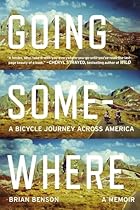
Going Somewhere is a memoir about Brian and Rachael’s bicycle trip across country from Wisconsin to Oregon. It is also the story of the point-to-point relationship of two young adults who learn that movement is not necessarily action. The trip is an epic journey of many tough miles of bike breakdowns, momentum killing headwinds, and almost daily exhaustion.
At first, the hardships of biking are rewarded by peak experiences in the beautiful Wisconsin countryside. But, it does not take long before the punishment of heat, hills, and junk food supplements to their diets cause Brian and Rachael to dread parts of each day. In fact, as they travel through Minnesota, North Dakota, Montana, Idaho, and Oregon the memoir is sketchy about many of the places the two visit and people they meet that probably were amazing and life enhancing. Brian became a detailed chronicler of the environment but a restricted observer of the psychology of stressful travel.
It is interesting that the two very different personalities remain relatively unchanged throughout the trip, especially with Brian. His journal describes “going somewhere” without a clear goal even though there is a set endpoint for the trip, Portland. Rachael, on the other hand, sees Portland as her home with friends and a lifestyle she wants to return to and maintain with new appreciation after the trip. The interest they both had in making music (that's how they met) is strangely lacking in the narrative except for a few times in the beginning of the trip.
I am a marathon runner and know the commitment, drive, and years of training it takes to complete a distance in a positive way, even though the event is exhausting and punishing for the body. I also know the psychology of finding joy in the last 6 miles of the run. It was very interesting to get an understanding of the difficulty and dangers of riding high end bikes for months along roads and highways. Like a marathon, many people have an unrealistic impulse to reach a very difficult athletic goal expecting to enjoy the effort and finish the event without sufficient physical training. Going Somewhere shows the consequences of putting a tremendous physical strain on body, mind, and relationships after minimal training. The reader will enjoy discovering if the ends justify the means for Brian and Rachael.

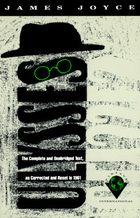
Ulysses by James Joyce (1934) is a novel about the interaction of social responsibility and personal desires. It focuses primarily on three characters: Stephen Dedalus a self-absorbed scholar attempting to find his artistic voice, Leopold Bloom who tries to meet his social responsibilities in a culture that is not completely accepting of him, and Molly Bloom (Poldy's wife) who struggles with her feminine destiny.
The novel parallels the structure of Homer's "Odyssey" that chronicles the 10 year struggle of Odysseus to return from war in Troy to his home in Ithaca. Ulysses, the Latin translation of the Greek name Odysseus, is Leopold (Poldy) Bloom who travels the streets of Dublin one Thursday on June 16, 1904. His goal is to accomplish his daily task of meeting his family's economic needs, forming social alliances with Dubliners (including Stephen), and satisfying his own drives for understanding and fulfillment. Odysseus sought to reunite with his wife and assess her fidelity in his absence, and Bloom looks forward to the end of the day when he returns to his home at 7 Eccles Street, concerned about his wife's unfaithfulness.
"Ulysses" is remarkable in its descriptive detail of the physical and psychological environments of Dublin and its characters. The feelings related to immersion in the living Irish city are so strong that there may be some irrational fear of being unable to return to current life. The entrance into the reality of the lives of Stephen, Molly, and Poldy is uncanny as readers become physically and psychically connected to characters. It is a matter of proximity. You lose your own personality as you accompany these people when they converse, walk the streets, visit stores, drink and philosophize, reveal themselves in stream of consciousness monologues, argue, pursue bacchanalian extremes, and have private battles with loss and melancholy.
The reader `sees' everything that day, the external locations and the inner worlds of the characters, with the "ineluctable modality of the visible." This is the direct and complete experience of Joyce's art without the restriction of our own frame of reference, history, obligations, and wants. It is intimidating to realize that your own life is changing, that part of your personal history now contains a new day of your own existence - you have extended your life for a day. Many people throughout the world celebrate a second birthday on June 16 (Bloomsday).
After publication of "Ulysses," I believe that James Joyce (like a few other artists) spent the rest of his life amazed at his creation. As he lay dying in hospital waiting for his wife to return to his bedside, he had to wonder where his inspiration originated, where he summoned the ability to give the gift of another day of life to us all.
The reader can benefit most from "Ulysses" by preparing to read it. Read (re-read) Homers "Odyssey." Pay close attention to the structure, the symbolic content, and the psychology of Odysseus. Odysseus was a flawed hero, externally brave but also self-serving and blind to parts of his own personality (like Bloom). Use "Ulysses Annotated" by Don Gifford to help guide you through the detail of theology, philosophy, psychology, history, rhetoric, and the physical layout of Dublin. This reference work is very good because it allows readers to have their own experiences by providing only supplementary content (facts) that help to understand the myriad allusions presented in the text. I suggest that you enjoy the many beautiful styles of prose presented in the 18 episodes pausing to quickly glance at the definitions in your opened copy of "Ulysses Annotated." Then before reading the next episode, go back and read the complete explanatory entries in this reference book. Give yourself a couple of months to enjoy the novel and add this new day to your life.